Blog

  • The Inner Game of Tennis

    The Inner Game of Tennis

    Curated fortnightly reads from Karmine book worms to set discerning minds into motion.

    Book Title: Inner Game of Tennis

    Author: W. Timothy Gallwey

    Duration: 2-4 hours

    Writing Style: Conversational & Reflective

    What is the main hook of this book?

    “The opponent within one’s own head is more formidable than the one across the net.”

    W. Timothy Gallwey wrote a book about tennis that somehow ended up on the shelves of CEOs, therapists, coaches, and just about anyone looking to master their mind. Some of the credit may belong to Bill Gates who couldn’t recommend this book enough. But it is eventually the sheer quality of the perspective that allowed these pages to be revisited by readers again and again.

    Because the real game Gallwey talks about is the one we play against ourselves. Let’s dive into what makes this classic worth returning to — even if you’ve never held a racquet.

    Premise / Core Idea

    Gallwey leverages the metaphor of tennis training to introduce a deceptively simple idea as his ‘core premise’. That we are not one, but two players:

    Self-1: The voice in our head. Critical, controlling, always nudging instructions.

    It’s the voice that judges, plans, worries, compares, and tries to “manage” performance. It thrives on the constant chatter – “Don’t miss,”

    “Why did you do that?”, “You’re messing up again.” In the author’s view, Self 1 doesn’t trust the body (Self 2) and constantly tries to override its natural instincts.

    At workplace, Self 1 often appears in the form of overthinking, micromanagement, perfectionism, and fear of failure.

    Self-2: The natural doer (the body). Instinctive, capable, quietly competent, if left alone.

    This is our intuitive, subconscious self, basically our body that quietly operates with literally no interference from us. The part that knows how to do things once it has learned. The body naturally learns best through awareness and experience, not commands.

    Classic example being, children learn to walk, catch, and run through leveraging Self 2 which is by observing, trying, and adjusting. Self-2 doesn’t talk or ruminate. It simply acts and most often, effortlessly.

    The inner game according to the author is about reducing the interference of Self 1 so Self 2 can do its thing. In practice, it is the difference between ‘thinking about the shot’ and ‘letting your body remember it.’ Self-2 the author maintains, knows how to swing once it’s seen and felt it. But Self-1 disrupts the flow by overanalyzing the motion mid-swing.

    And is it not just about tennis. That’s equally about presenting in a boardroom, pitching a client, even parenting a toddler at bedtime. It of course comes with continuous practice and preparing the Self-2 to naturally adapt to what it intuitively understands rather than the suggestive narrative which Self-1 provides.

    Trying Hard ≠ Performing Well

    One of Gallwey’s sharpest provocations is this: ‘Trying too hard is often the very thing that gets in the way.’

    In a world obsessed with hustle, this feels refreshingly subversive. He suggests that when we grip tighter, we lose fluidity. When we judge every move, we shrink our range. And when we over-correct, we forget how to just be.

    There’s liberation in realizing that peak performance isn’t about doing more, but interfering less. Formulaically speaking, it becomes thus – Performance = Potential – Interference.

    Observation Over Judgment

    This practice of non-judgmental observation is recommended to build awareness without anxiety. Applied off-court, it’s the kind of lens that helps leaders reflect without spiraling, coaches listen without fixing, and professionals learn without flinching.

    Application

    Let us try and apply some of these concepts in our business world. For example, how does this book link to risk management principles?

    Risk management, too, is often less about the risk itself and more about how organizations respond to it internally. Whether with clarity or chaos. The principles can reframe modern risk management.

    Self-1 over-instructs, micromanages and doubt. It is a control culture obsessed with rules, checklists, and optics.

    Self-2 acts with instinct, flow, and trust based on defined boundaries of principles. It is a culture that enables sound judgment, awareness, and empowered decisions.

    Another practical view point is the question we are always asked when we meet our clients – What are the new tools, layers, processes, technology levers that we can build into the system? How much do they cost? What are others in my peer group doing?

    Instead of layering with new information, the better questions to ask might be – What’s getting in the way of existing capability? Are we sufficiently leveraging what we already have? How can we optimize our existing tech stack to enable greater efficiencies?

    An underrated luxury we are all given is also to do with the innate body intelligence or what we often call, ‘intuition’. We select our favourite candidates in the first few minutes of the conversation, the VCs often make up their mind even before they know the numbers and one handshake is good enough to say no. Optimally leveraging the strength of Self-2 is sometimes they key difference between good and bad decisions.

    Our Take (~150–200 words)

    n many ways the concept is not necessarily new. A tangent of this is also dealt with in the seminal work – Thinking, fast & slow, buy Daniel Kahnemann where he talks about the dual nature but with a different lens (system 1 & 2 – the intuitive and the slow, deliberate).

    It is important to bring this up because the conclusions are somewhat different. Gallwey wants us to trust intuition and reduce mental noise to improve superlative performance. It is the mantra of flow. Kanhemann is however wary of intuition. He wants us to question it, be wary of the over confidence is sometimes nudges us towards.

    We think the principles of Inner Game of Tennis are best leveraged in activities that require performance, creative flow, presence and coaching. The principles might somewhat leave us deluded if we apply it to say, building robust strategy, hiring, risk management and judgement calls. Those are the spaces where we need a healthy mix of both, Self-1 & Self-2, to optimize results.

    One concept we particularly liked was that of the value of an ‘opponent’ or an ‘adversary’. The book redefines competition in a very interesting manner. We will let a quote do the talking:

    “Once one recognizes the value of having difficult obstacles to overcome, it is a simple matter to see the true benefit that can be gained from competitive sports.

    In tennis who is it that provides a person with the obstacles he needs in order to experience his highest limits? His opponent, of course! Then is your opponent a friend or an enemy? He is a friend to the extent that he does his best to make things difficult for you.

    Only by playing the role of your enemy does he become your true friend. Only by competing with you does he in fact cooperate! No one wants to stand around on the court waiting for the big wave.

    In this use of competition, it is the duty of your opponent to create the greatest possible difficulties for you, just as it is yours to try to create obstacles for him. Only by doing this do you give each other the opportunity to find out to what heights each can rise.”

    The book offers:

    • A fresh lens that confidence is often quiet trust in your own self.
    • A reminder to coach less and believe more in others and ourselves
    • A perspective to manage performance anxiety by getting out of your own way

    It is a manual for uncluttering the mental court.

    Challenger thoughts

    • Most Cognitive Behavioral Approach (CBTs) suggest we work with our inner dialogue, actively analyse their validity and reshape them instead of completely ignoring the noise. We think inner critic is not always noise. It is our in-house risk manager.
    • Another aspect that is somewhat overlooked in the book is the value of practice and consistent effort in the right manner. Entering in to confident flow does require immense ‘conscious’ practice. Trusting intuition before that may not be fruitful.
    • Self-1 and Self-2 might be an over-simplistic model? Perhaps our internal decision making is not all that straightforward and we are driven by things far more unknowable and uncontrollable.
    • Structure, systems and cadence are crucial to enabling successful utilization of Self-2.

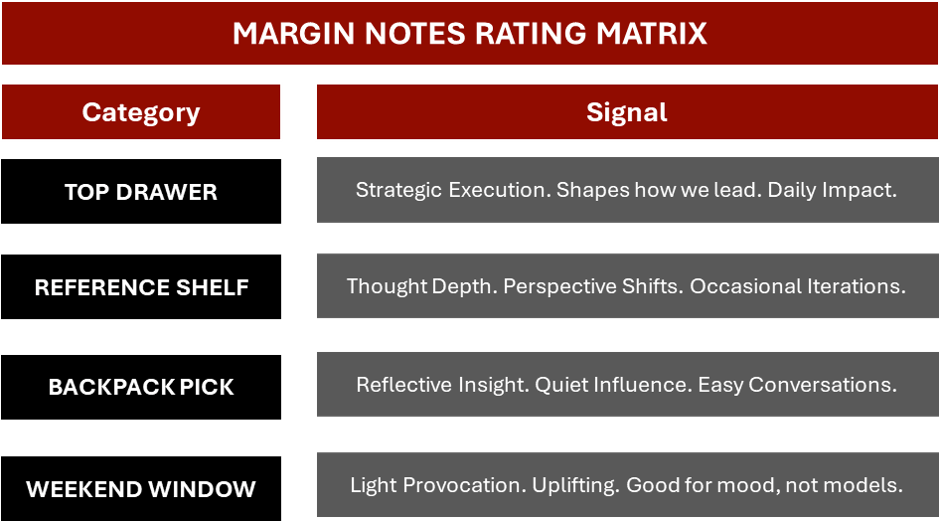
    The Thinking Shelf™ Rating

    This book certainly hits your “Reference Shelf”. We may not open it often. But the insights remain ever more valuable to challenge our assumptions of peak performance.

    Choose one from the below with a short rationale:

    • Top Drawer (Strategic Execution)

    Shapes how we lead. High impact on daily decisions.

    • Reference Shelf (Thought Depth)

    Changes how we think at a macro level. Rarely opened, never forgotten.

    • Backpack Book (Reflective Insight)

    We take it on walks. Influences philosophy more than playbooks.

    • Weekend Window (Light Provocation)

    A light, inspiring read—good for mood, not models.

  • Inner Game of Tennis

    Inner Game of Tennis

    Duration: 2-4 hours

    Writing Style: Conversational & Reflective

    What is the main hook of this book?

    Gallwey wrote a book about tennis that transcended sport, landing on desks of CEOs, coaches, and therapists alike. Part of its cult status may stem from fans like Bill Gates, but its staying power lies in a deceptively simple idea: performance is an inner game – the one we play against ourselves.

    The opponent within one’s own head is more formidable than the one across the net.

    Premise / Core Idea

    Gallwey splits the self into two players:

    Self-1: The voice in our head. judgmental, anxious, controlling. In the author’s view, Self-1 doesn’t trust the Self- 2 and constantly tries to override its natural instincts.

    At workplace, Self-1 often appears in the form of overthinking, micromanagement, perfectionism, and fear of failure.

    Self-2: The natural, intuitive doer (the body). instinctive, capable, and fluid when left alone.

    This is our intuitive, subconscious self, the part that knows how to do things once it has learned. Classic example being, children learn to walk, catch, and run. Self-2 doesn’t talk or ruminate. It simply acts and most often, effortlessly.

    Peak performance, he argues, comes not from trying harder but from silencing Self-1 and trusting Self-2. The body knows what to do and thinking often gets in the way. This principle applies far beyond sport: whether in boardrooms, negotiations, or bedtime parenting routines.

    The inner game according to the author is about reducing the interference of Self 1 so Self 2 can do its thing. In practice, it is the difference between ‘thinking about the shot’ and ‘letting your body remember it.’ Self-2 the author maintains, knows how to swing once it’s seen and felt it. But Self-1 disrupts the flow by overanalyzing the motion mid-swing.

    Trying Hard ≠ Performing Well

    One of Gallwey’s sharpest provocations is this: ‘Trying too hard is often the very thing that gets in the way.’

    In a world obsessed with hustle, this feels refreshingly subversive. He suggests that when we grip tighter, we lose fluidity. There’s liberation in realizing that peak performance isn’t about doing more, but interfering less.

    Formulaically speaking, Performance = Potential – Interference. Observation over judgment is recommended. Instead of critiquing every move, simply notice. Leaders, coaches, and professionals can benefit from this lens thus fostering awareness without anxiety.

    Application

    The book’s principles align surprisingly well with modern business dynamics. Take risk management:

    · Self 1- driven cultures rely on control, checklists, and fear of failure.

    · Self 2- enabled cultures emphasize trust, intuition, and clarity within structured boundaries.

    Instead of endlessly adding tools, the smarter approach might be asking: What’s interfering with what we already have? In high-stakes environments, from VC funding calls to talent selection, gut instinct often leads the charge. Harnessing Self-2 effectively can be the difference between overthinking and insight.

    Our Take

    Gallwey’s core idea parallels Kahneman’s Thinking, Fast and Slow, yet reaches different conclusions. Kahneman warns us of intuition’s flaws. Gallwey wants us to lean into it, especially in performance-driven arenas.

    We think the principles of Inner Game of Tennis are best leveraged in activities that require performance, creative flow, presence and coaching. The principles might somewhat leave us deluded if we apply it to say, building robust strategy, hiring, risk management and judgement calls. Those are the spaces where we need a healthy mix of both, Self-1 & Self-2, to optimize results.

    One standout concept: Your opponent is your ally. The book redefines competition in a very interesting manner. We will let a quote do the talking:

    The book offers a manual for uncluttering the mental court, a fresh lens that confidence is often quiet trust and a toolbox to manage performance anxiety by quietening inner critic.

    Challenger thoughts

    • Most Cognitive Behavioral Approach (CBTs) suggest reshaping and not ignoring / silencing our inner dialogue. We think inner critic is not always noise. It is our in-house risk manager.
    • Gallwey perhaps underplays the role of structured, conscious practice. Intuition / flow needs training. Trusting intuition before that may not be fruitful.
    • The Self-1 vs Self-2 model might be too binary. Human behavior is more complex and layered.
    • Structure, systems and cadence are crucial to enabling successful utilization of Self-2.
  • Mind the Gap: Bridging Board Oversight and Operational Realities

    Mind the Gap: Bridging Board Oversight and Operational Realities

    Background

    Risk management failures in mid-sized and emerging companies have made headlines from Silicon Valley to Mumbai, often tracing back to a troubling disconnect between boardroom understanding and on-the-ground realities. This “board-versus-operational reality” gap in risk oversight has tangible consequences; from financial losses and regulatory penalties to reputational damage. A recent consulting survey indicated nearly 55% of board members say their company’s risk management struggles to keep pace with business strategy changes.

    In an era of rising uncertainties, board members and independent directors are expected to serve as crucial sentinels, yet their effectiveness is often hampered by cultural and informational barriers. As a part of this series, we explore in this article as to why mid-sized enterprises are prone to governance gap, the real-world fallout when it goes unaddressed, and how boards can close the chasm between the view from the boardroom and the operational reality on the ground.

    Understanding the Oversight Gap

    Every corporate board has a fiduciary duty to oversee risk, but there’s often a disconnect between what boards believe about risk management and what’s actually happening within the organization. In many mid-sized firms, boards receive periodic risk reports and updates that paint a reassuring picture. Risks identified, controls implemented, compliance boxes checked. Yet the day-to-day reality in business units or project teams can be very different. Metrics and reports presented to the board may be incomplete or overly optimistic, leading to a false sense of security at the governance level.

    Root Causes of the Gap

    • Information Asymmetry: Senior executives may filter what they escalate to the board, and mid-level managers might downplay or fail to report issues upward, especially in a culture that ‘shoots the messenger’.
    • Limited Risk Expertise: Limited expertise in specific risk areas often exacerbates the problem. If directors aren’t well-versed in emerging risks (be it cybersecurity, regulatory compliance, or operational safety), they may not know the right questions to ask or may accept vague assurances. In fact, one analysis observed that a lack of operational risk expertise can make board members reluctant to stray from their domain.
    • Siloed Reporting: Operational risks are often tracked inconsistently, failing to reach the board in a meaningful way. Without the right data and Key Performance Indicators (KPIs), they might not realize the true magnitude of certain risks.
    • Differing Perspectives & Priorities: It helps to recognize that boards and operational teams often view risk through different lenses requiring better communication to align high-level oversight with ground-level realities.

    Why Mid-Sized Companies Are Especially Vulnerable

    • Weak Risk Framework: Large multinational corporations often have extensive risk management frameworks, dedicated risk officers, and layers of oversight. In contrast, small and mid-sized enterprises (SMEs) frequently operate with leaner structures which can widen the board-operational gap. Research shows that many mid-sized companies do not have fully defined Enterprise Risk Management (ERM) programs due to cost constraints, limited resources, and fewer dedicated risk professionals.
    • Lean Structures: Often, employees wear multiple hats; for example, the finance head might also oversee compliance, or operations managers double as safety officers. This can lead to gaps in expertise and bandwidth when it comes to systematically identifying and mitigating risks. The board might assume that “someone in management” is handling risk, but in reality, risk responsibilities can fall through the cracks in a mid-size organization’s structure.
    • Rapid Growth: Mid-sized firms are frequently in high-growth mode. They are expanding into new markets, launching products, or undergoing digital transformation, all of which introduce new risks. However, governance processes in these companies often lag behind their growth. A post-mortem by regulators on Silicon Valley bank observed that the bank’s growth far outpaced the abilities of its board and management to install a suitable risk control infrastructure.
    • Cultural Pressures: A ‘Business Today’ magazine analysis of recent startup scandals noted a “convenient lack of oversight from boards, as start-ups get caught up in the rat race of growth over profits”.  Mid-sized enterprises, especially those led by founders or family owners, can have tight-knit cultures with strong top-down influence. If the leadership’s emphasis is on aggressive growth or hitting targets “at all costs,” employees may feel pressure to prioritize results over risk compliance.
    • Weak Internal Controls: Mid-sized firms often lack the robust internal controls and audit functions that larger firms use to catch issues early. Risk assurance processes in a smaller company might be outsourced or minimal, and risk reporting may not be integrated company-wide. This means the board’s usual safety net, internal audit and compliance reports, may not be effective.

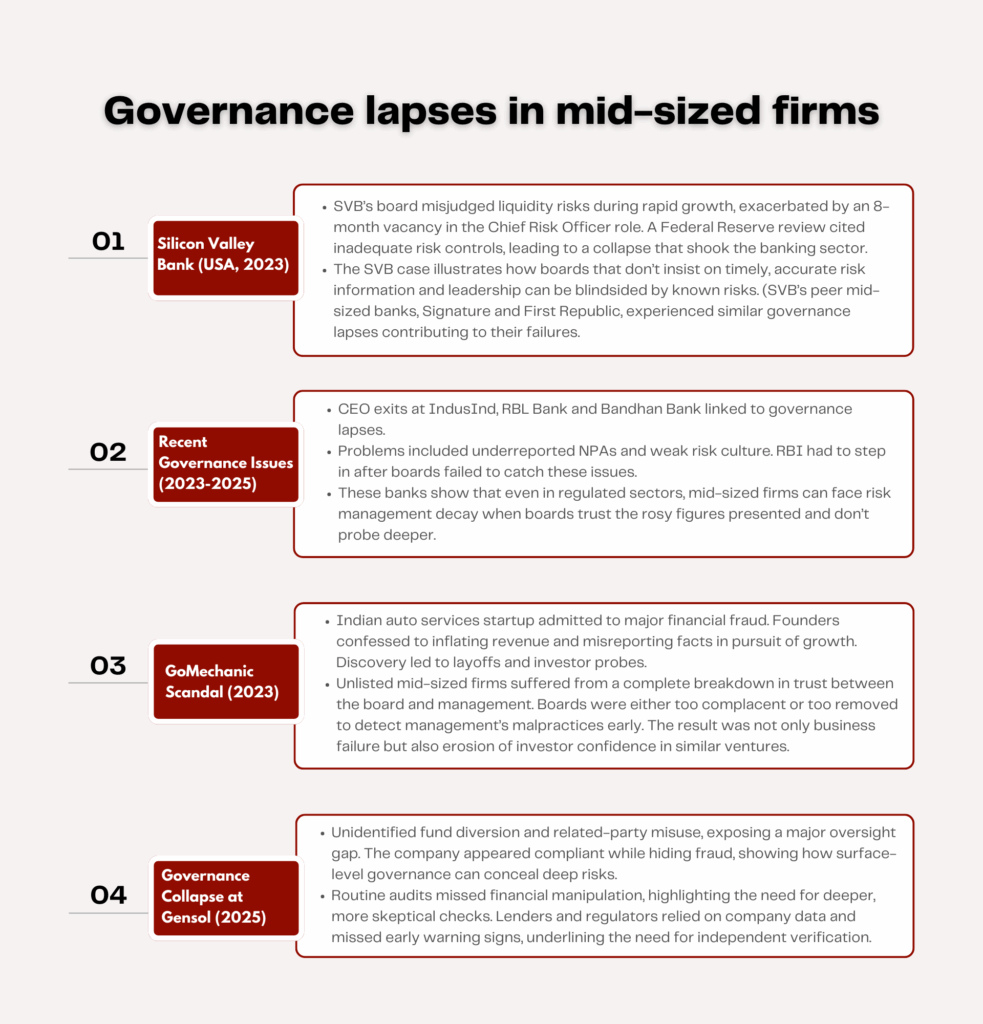
    Understanding Recent Risk Management Failures – Real-World Consequences:

    Governance lapses in mid-sized firms lead to serious failures, underscoring the need for boards to bridge the oversight gap. Recent cases illustrate how the board-operational disconnect fuels crises:

    These examples across different sectors highlight the critical gap between boards oversight and operational realities, where incomplete knowledge of day-to-day operations led to risk management failures. Despite having boards and risk policies on paper, governance breakdowns allowed small issues to escalate into major crises. For mid-sized and emerging companies, closing the board-operations gap in risk oversight is not just a best practice but a strategic necessity for survival and success.

    Closing the Gap: Practical Steps for Boards to Enhance Risk Oversight

    Bridging the divide between boardroom perception and operational reality in risk management requires concerted action. Boards of mid-sized and emerging companies can take practical, actionable steps to enhance the sanctity of their risk oversight role. These steps span tools and technology, structural and process improvements, and cultural shifts. Below are key recommendations for boards and their companies:

    • Unfiltered Communication: Boards must insist on clear and candid risk reporting. Boards should demand that risk reports be forward-looking, impact-focused, and unfiltered. Instead of high-level summaries that gloss over issues, reports should explicitly connect risks to business outcomes. This can be done through reviewing “risk dashboards” that include key risk indicators, incident logs, and mitigation status updates for major / emerging risks. 
    • Strengthen risk governance structure: Many mid-sized companies suffer because no single leader is accountable for enterprise-wide risk – plugging this gap is vital. Establish regular sessions where the risk officer and internal audit head can speak to directors without senior management in the room, fostering open communication. 
    • Translate Technical Risks & Elevate risk discussions: Operational details (e.g., “unpatched firewalls”) should be framed in business terms (e.g., “potential $2M loss from a breach”).
    • Leverage Technology and Data for Risk Monitoring: In today’s digital age, even mid-sized companies can afford tools to enhance risk oversight. Boards should encourage management to utilize risk management software, dashboards, and data analytics to gain real-time visibility into risks. According to a 2025 survey, 76% of mid-market businesses already use technology in some aspect of risk management, but only 11% have fully integrated. There is immense room to grow here.  
    • Fostering risk aware culture through appropriate tone at the top: Perhaps the most critical yet intangible fix is cultural. The board and executive leadership must set the tone that risk management is everyone’s responsibility and is valued. Leadership should visibly recognize and reward teams that identify and manage risks well, turning risk management successes into learning moments company-wide. Conversely, there should be accountability when risk processes are ignored or warnings silenced. The board could ask for a “Risk Culture” assessment. If results show problems say, the board must push management to address this through appropriate training. 

    As experts advise, boards should exercise an “inquisitive mindset; digging deeper, challenging assumptions, and encouraging open communication. All before adverse events materialize.”

    In essence, bridging the gap requires aligning these perspectives. When governance and implementation are in sync, Boards can anticipate issues and support management in addressing them proactively, rather than cleaning up surprises after the fact.

    The Strategic Role of Independent Directors in Risk Oversight

    Independent directors are critical for objective oversight, challenging assumptions and fostering a risk-aware culture. Independent directors bridge the gap by:

    • Asking Tough Questions: Free from management ties, they probe operational realities (e.g., “Are cybersecurity resources adequate?”).
    • Bringing Expertise: Directors with cyber or compliance backgrounds enhance oversight, reducing financial irregularities (per governance surveys).
    • Setting Tone: By engaging risk managers directly and rewarding candor, they encourage issue escalation.
    • Leadership in Crisis: As seen in BharatPe (2022), independent director can direct investigation of misconduct, thus protecting stakeholder interests.

    In summary, Independent Directors also play a strategic role as risk sentinels and governance champions. They must use their position to ensure the board isn’t operating with blind spots. As one LinkedIn corporate governance commentary put it, independent directors act as “ethical custodians, guardians of shareholder interests, and champions of accountability,” reinforcing structures that mitigate risk.

    Conclusion: Strengthening the Board’s Risk Guardianship

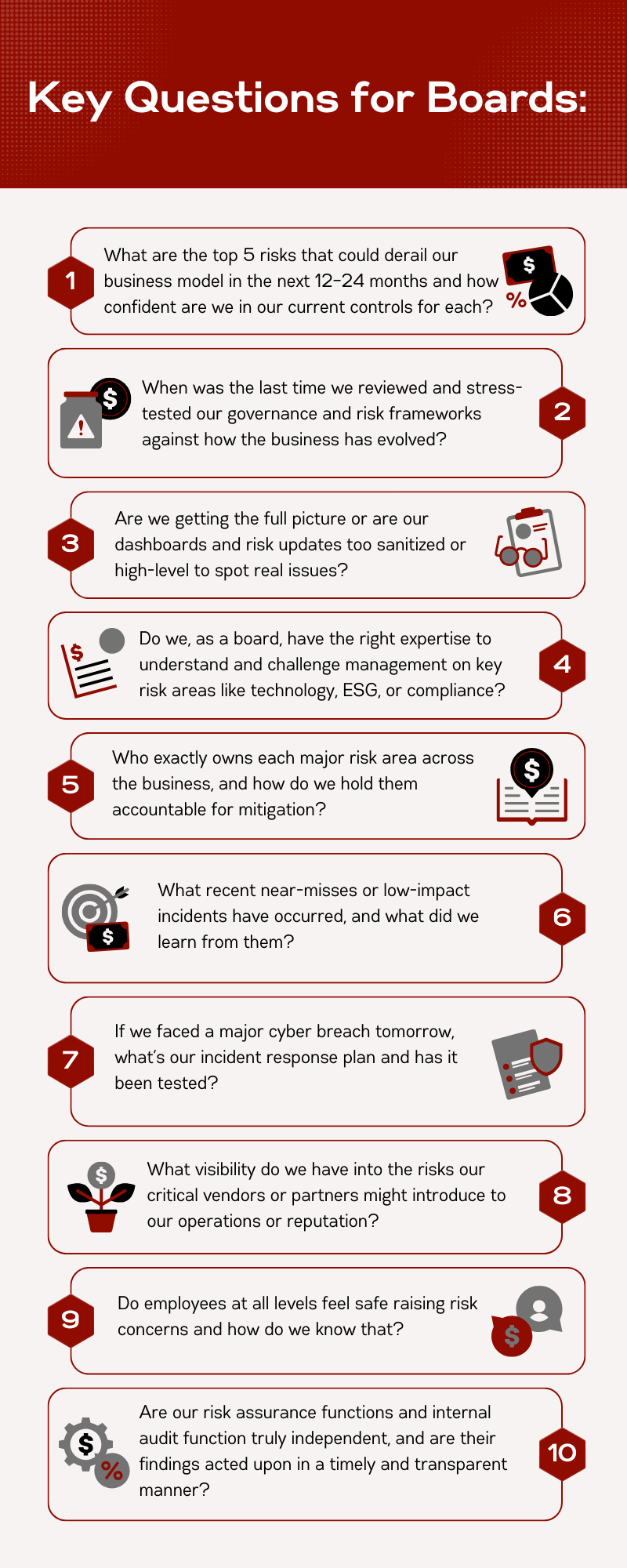
    We close this article with 10 sharp questions that we believe the board members & independent directors must ask in order to obtain comfort in the risk / governance framework within mid-sized enterprises. Obtaining comfort on these areas will naturally cascade into the direction and investments that need to be made towards better risk management.

    As businesses globally navigate an increasingly volatile world; from cyber threats and supply chain disruptions to regulatory shifts and beyond, closing the board-operational reality gap will distinguish the resilient companies from the rest. With boards committing to the sanctity of their risk oversight role, mid-sized enterprises can confidently stride forward. 

    Sources:

    • AuditBoard Blog – “The Business Resilience Gap: A Tipping Point” (EY Global Board Risk Survey findings) auditboard.com auditboard.com.
    • Risk & Insurance – “Middle-Market Businesses Face Risk Protection Gaps” (Nationwide survey of mid-market firms, 2025) riskandinsurance.com riskandinsurance.com.
    • Harvard Law School Forum (Glass Lewis post) – “Corporate Governance, Board Oversight & the 2023 Banking Crisis” (Analysis of SVB, Signature, First Republic failures) corpgov.law.harvard.edu corpgov.law.harvard.edu.
    • Economic Times (India) – “What’s behind the CEO resignations in India’s private sector banks?” (Governance lapses in mid-tier banks) m.economictimes.com.
    • Business Today (India) – “How Zilingo’s Troubles Bring to the Fore Governance Issues at Start-ups” (Start-up governance lapses, Zilingo and BharatPe) businesstoday.in businesstoday.in.
    • Reuters – “Investors of India’s GoMechanic seek audit into ‘inflated’ financials” (GoMechanic startup financial fraud admission) reuters.com reuters.com.
    • ForensicRisk Alliance – “Navigating the Storm: learning from past corporate failures in the GCC” (Gulf corporate governance failures and lessons) forensicrisk.com.
    • dss+ Consulting – “When Boards Miss the Warning Signs: Elevating Operational Risk Oversight” (Operational risk oversight challenges and recommendations) consultdss.com consultdss.com.
    • LinkedIn Pulse – “Independent Directors: Navigating Corporate Governance” (Role of independent directors in risk oversight and culture) linkedin.com.
    • BusinessToday (India) – “YES Bank independent director…resignation letter” (Yes Bank governance failure, independent director protest) businesstoday.in businesstoday.in.

  • ALICO OFAC Case Article

    ALICO OFAC Case Article

    Insurance giant American Life Insurance Company (ALICO), a Delaware subsidiary of MetLife, recently found itself at the center of an unusual crisis following a penalty from the U.S. Office of Foreign Assets Control (OFAC). The company was fined $178,421 for violating U.S. sanctions.

    We don’t often see sanctions penalties being doled out to insurers. While the case study is unique, it also sheds light on the challenges insurers face in maintaining effective compliance frameworks and a reminder of continued susceptibility, especially via subsidiaries and third parties.

    The Case

    Part 1

    In Feb 2023, a sales agent in the UAE requested a customized insurance policy on behalf of a client (Client A).

    Following the standard compliance procedure, ALICO collected KYC information, including a trade license that identified the Client A’s owner as the Iranian Embassy. The details went through the usual sanctions screening test (OFAC SDN).

    While the alerts were generated, it was treated as a false positive since the entity itself was not an SDN or a blocked person.

    However, the PEP screening pointed out the direct connection to the Iranian Embassy’s ownership; it was escalated to the regional compliance team and subsequently to MetLife’s Anti- Financial Crimes Unit, which declined the onboarding.

    So far so good.

    Seven days later, the same sales agent resubmitted Client A’s request, this time via a pre- packaged policy instead of a custom policy via a third-party administrator. In addition, the agent removed reference to the Iranian Embassy from the trade license, enabling the SDN and PEP screenings to pass without any flagging. Consequently, the policy was issued.

    Evidently, ALICO seemed to have lacked a system to screen new applications against those that have been either rejected/blocked previously, especially those processed via TPAs.

    Part 2

    The same sales agent later submitted another request for a customized policy via both the underwriters and the TPA for a school in the UAE (which had the term ‘Iranian’ in its name). (Client B). He went so far as to informally ‘stress test’ the trade license data of the school.

    Despite the name reference, no alerts were triggered. Based on this confidence, he went ahead and submitted the policy, which was then subsequently approved.

    Here, there seemed to be some model issues with the screening facility leading to the actual name not getting alerted despite having the name “Iran” in it.

    Part 3

    Later, Client B attempted to pay premiums for both client A & client B via a single check drawn at Bank Melli, a blocked Iranian institution. The payment was promptly rejected.

    The client requested approval to pay the premiums in cash, facilitated by the sales agent. ALICO conducted a review and another screening of the transaction. Despite the clear connection to Bank Melli and the trail of a blocked transaction screening effort, no red flag was raised, and the insurer ended up accepting USD 78,143.36 via cash.

    Here, we see multiple control failures. First, controls around requests for cash payment after a failed check transfer owing to a blocked instituted list. Second, combined payment for two unrelated entities. Both seen together should have raised sufficient reasons for enhanced due diligence. With or without an SDN reference, this looked like a red flag.

    Part 4

    During the revalidation and reverse screening process, it was ‘recollected’ by a member that Client A was rejected owing to controllership issues and requested further investigation into the deviation.

    During the course of review, manipulation of the trade license was noted. This cascaded into a more detailed round of reviews that unraveled several policies issued to another Iranian- controlled school in the UAE (Client C), despite letterhead stating ‘The Islamic Republic of Iran,’ which was not flagged during the KYC due diligence process.

    Further, certain backdated claims by the said entities were paid by the TPA despite multiple notifications by ALICO.

    Here again, we see various control failures. What if no one recollected the connection with the entity in the first place? The control was purely a human intuitive check rather than anything else.

    Multiple instances of similar categories of customers getting passed through without sufficient screening allude to weak KYC/due diligence control frameworks at the sales, compliance, and branch levels & at TPA levels.

    In summary, ALICO ended up collecting premiums worth approx. USD 240,000 and claims totaling approx. USD 200,000.

    Owing to the voluntary self-disclosure and the non-egregious nature of the violations, the final penalty amount was reduced from a maximum civil penalty of USD 85mn to USD 178,421.

    Way Forward

    Based on the above case study, insurers may want to consider

    • Strengthening screening protocols to consider generation upon the appearance of names of sanctioned countries.
    • Screening counterparties against historically blocked/rejected/declined/blacklisted entities.
    • Enhancing KYC & documentation review protocols
    • Additional controls around receiving cash premium post-failure of check payments drawn at blocked FIs.
    • Strengthening oversight and control frameworks as implemented by TPAs and other outsourced entities.
    • Improving training & development mechanisms for sales, TPAs & compliance staff on identifying and mitigating money laundering & sanctions risks.
  • Gaping Gaps: Perspective on the Ruthless TD Bank Consent Order

    Gaping Gaps: Perspective on the Ruthless TD Bank Consent Order

    Reality is indeed more curious than fiction. Every time I read a major consent order, I end up thinking this is it; it can’t get any worse. And then just like that, without much fanfare, there comes another consent order that magically wipes away all the optimism I closed the previous consent order with.

    I had written a blog post on Binance consent around ending with the premise:. Here I am reading another black hole of failures, this time by a full-fledged bank.

    I am not even sure if people do end up reading these lengthy (often over 100 pages) consent orders doled out by the meticulous global regulators. If they would, the same bloody problems would not recur year after year, for decades on end.

    On October 10, 2024, TD Bank (the 10th largest bank in the U.S. by assets) pleaded guilty to multiple charges related to failures in its anti-money laundering (AML) program. The bank has agreed to pay a staggering $3 billion in penalties, marking it as the largest fine ever imposed under AML legislation in U.S. history.

    The implications of this guilty plea are profound. Attorney General Merrick Garland stated that by neglecting compliance measures, TD Bank effectively made its services accessible to criminals.

    A – Thematic view

    Fundamentally, in the eyes of the regulator, TD Bank ‘wilfully’ failed to implement an AML program aligned with BSA requirements during the period of review. This single failing could be surmised as the parent concern.

    As we have consistently seen in the past, intent is crucial in context to how regulators respond to deviations. Wherever intent fails, almost everything else becomes incidental. All large fines/penalizations always have this as the underlying thread.

    The crux of the violations stems from TD Bank’s inability to monitor and report suspicious transactions effectively. According to court documents, between 2014 and 2023, TD Bank exhibited “long-term, pervasive, and systemic deficiencies” in its AML program.

    The bank’s systemic failures spanned all pillars of its AML program, including ineffective oversight, inadequate internal controls, and insufficient training for staff on AML risks and typologies.

    B – Specific deficiencies

    1 – Oversight and Management:

    There was ineffective oversight by the designated BSA officer, who failed to escalate material issues adequately. Additionally, the compliance resources were not given sufficient powers to address the issues in an independent manner. Secondly, the Board consistently chose not to allocate sufficient resources for compliance efforts. This oversight failure was part of broader systemic issues within TD Bank’s AML framework, which lacked sufficient resources and management attention.

    Some interesting issues quoted in the consent order

    • TD Bank’s compensation system reflected the apparent disincentive for the BSA officer to incur costs needed to assure the bank’s compliance with the BSA. At times during the review period, both the global head of AML and the BSA officer’s annual self- assessments noted as an “accomplishment” their respective abilities to “develop [the AML] program within a flat cost paradigm without compromising risk appetite.”
    • Despite self-identifying the need for additional resources, the head of the AML Investigation Unit (AIU) recommended waiting to reassess the need to hire new employees to fill this gap and extending the contracts of temporary employees in the meantime.
    • Appointing multiple AML managers without any prior experience in AML also hindered the BSA officer’s ability to effectively monitor the bank’s day-to-day compliance with the BSA.
    • The BSA Officers lacked direct authority over an AML Technology Head, who oversaw the transaction monitoring system, as well as the head of AML Operations within the AML function.

    2 – Chronic underperformance in AML Transaction Monitoring:

    “Unless absolutely required, new scenario development in [the transaction monitoring system] is regrettable spend.” – TD Management

    The Bank’s transaction monitoring system was described as willfully deficient and understaffed, leading to significant gaps in reporting suspicious activity. Approximately $18 trillion in customer activity went unmonitored due to inadequate transaction monitoring systems. This included a staggering 92% of total transaction volume that was not automatically monitored.

    An action plan submitted to internal audit in June 2018 identified the backlog’s root cause as inadequate staffing levels, as well as transaction monitoring system issues. In 2018, the AML program registered over 70,000 backlogged detection alerts and roughly 3,000 aged subpoena responses and further investigation cases. Despite such a glaring situation, the Bank refused to make the requisite investments to prevent future violations until near the end of the review period.

    The Bank failed to monitor a number of transaction types, including ACH, certain funds transfers, and certain monetary instruments. This failure represented over 80% of the activity in these types of transactions and aggregated to trillions of dollars in value.

    Some case studies quoted in the consent order

    • Since at least 2012, TD Bank knew it failed to monitor virtually any domestic ACH transactions. In 2012, AML employees recognized a need to do so and proposed a scenario to monitor such ACH transactions. An AML senior manager rejected their request.
    • Between 2016 and 2019, TD Bank went through a transition to upgrade to a new system. During this upgrade, the bank paused all changes to transaction monitoring scenarios but did not end up selecting a new system up until 2021. Overall, including the transition phase, no new scenarios or modifications to old scenarios were performed for a total of 4 years.
    • From August 2023 to February 2024, there were at least four presentations to TD Bank executives that compared the coverage between the old and new systems, with each presentation noting a substantial difference between the two, and one describing a monthly increase of “$220 billion of transactions (123% increase)” covered under the new system’s transaction codes. However, during this time, TD Bank executives did not apply mitigating controls or notify regulators.
    • Bank leadership temporarily “paused” scenarios to remain dormant for years and failed to implement new scenarios even after identifying risks. The bank also did not effectively test its transaction monitoring system to ensure that it captured the bank’s risks comprehensively.

    3 – Customer Due Diligence (initial & ongoing monitoring)

    The bank’s customer due diligence processes were pretty inadequate, failing to identify discrepancies between expected and actual customer activities. This included a lack of ongoing monitoring to update customer information and assess risk profiles effectively.

    Failure to establish an effective CDD program and critical, ongoing issues with the Bank’s customer risk rating processes allowed millions of high-risk customers to remain unscored during the review period, significantly impeding the Bank’s ability to monitor its customer base and address associated risks.

    Some case studies quoted in the consent order

    • Owing to a lack of resources, there was a significant delay in de-marketed high-risk customers. For example, from 2018 to 2021, such customers received more than $5 billion into their accounts, with an average of more than $250,000 per account after a request to initiate account closure by an AML employee.
    • For a customer—a HVAC company—undetected suspicious activity spanned a nine- month period, from July 2023 to April 2024, and included over $3.5 million in a combination of more than 1,000 P2P transactions, as well as check deposits, withdrawals, and ACH transactions. This high volume of activity drastically conflicted with the customer due diligence documentation collected by TD Bank, which reported the maximum annual sales revenue of this customer as $500,000.
      Various expenses included those pertaining to visa, airfare, immigration services, ATM withdrawals from high-risk countries, etc., clearly indicating potential for human trafficking, but there was no action taken in this regard by the bank. Even the STRs submitted were incomplete and not reflective of the nature and extent of potential vulnerabilities.
    • In July 2019, the bank onboarded accounts for a New York-based religious institution despite its leader’s ties to terrorist organizations and involvement as an unindicted co- conspirator in the 1993 World Trade Center bombings. Despite this publicly available negative news, TD Bank failed to perform adequate due diligence at account opening and failed to understand its customers’ terrorism-related associations.

    4 – SAR & CTR filing

    The bank did not file timely and accurate Suspicious Activity Reports (SARs) for transactions that met the threshold for reporting.

    The investigation noted that the bank willfully filed more than 1,000 inaccurate CTRs, some of which not only failed to meet regulatory reporting requirements but also misled law enforcement. FinCEN’s investigation identified more than 4,000 late-filed CTRs covering more than $150 million in cash transactions filed weeks after the required deadline.

    TD Bank willfully failed to timely file over 6,000 SARs, which involved suspicious transactions totaling more than $500 million. This delay in reporting was attributed to significant backlogs in investigations of potentially suspicious activities.

    • The bank produced internal reports highlighting which customers—and the branches at which they transacted—generated the greatest amount of cash activity in a given period. These manual reports were not reviewed and were not designed to mitigate AML risks and therefore did not serve as an effective control.
    • Cash activity identified a New York-area company purporting to operate in the clothing industry as among the bank’s top customers for cash transactions, with this customer conducting $8 million to $20 million each quarter over hundreds of transactions across multiple TD Bank branches. This included a period during the COVID-19 pandemic when many cash-intensive businesses experienced declines in transaction volumes. DOJ later indicted an individual associated with the customer.

    Further, the BSA Officer, as well as people involved in the generation of these reports to the BSA Officer, never questioned why a clothing company would be engaged in such a high level of cash activity volume during the pandemic, even though an AML analyst specifically highlighted this customer in the report. No steps were taken to verify that these reports were reviewed.

    • 2,000 transactions were processed for Customer Group C, primarily during a nine-month period, from July 2023 to April 2024, with an aggregate value of over $250 million. Customer Group C, purportedly operating in the sales finance and real estate industries, had informed TD Bank, as part of the Bank’s CDD processes, that their intended wire activity would be minimal and would not exceed $25,000. Additionally, Customer Group C estimated their annual sales would not exceed $1 million; in fact, Customer Group C conducted over $1 billion in transactions through TD Bank, with over 90% of the incoming funds from a UK-based cryptocurrency exchange and more than 60% of outgoing transactions sent as wires to a Colombian financial institution that also offers virtual asset-related services.

    5 – Employee Complicity

    The report indicates that some TD Bank employees were complicit in various BSA violations, accepting bribes and failing to report suspicious behaviors despite being aware of them. For many of the vulnerable accounts opened via employee complicity, the bank failed to timely file accurate SARs and considerably delayed closing the accounts, which allowed millions of dollars’ worth of suspicious activity to continue to flow unobstructed through the bank.

    Case study

    Beginning in early 2021, Individual A exploited their position to facilitate money laundering activities in exchange for bribes. During their tenure at the Bank, Individual A opened over 2,000 accounts whose account holders conducted more than 600,000 transactions aggregating to over $200 million, many of which were shell companies with nominee owners.

    In return for their role in facilitating the funnel accounts, Individual A received thousands of dollars in bribe payments. Certain of the accounts opened by Individual A were then used to launder narcotics proceeds, including to Colombia.

    6 – Training & Development

    The bank’s personnel were inadequately trained to recognize and respond to AML risks associated with its products and services. This lack of training contributed to the failure in monitoring transactions effectively and identifying suspicious patterns.

    7 – Weak Independent Testing

    There was insufficient independent testing of the AML program, which failed to identify material gaps in compliance. The BSA officer did not prioritize or ensure that these tests were conducted adequately, contributing to ongoing vulnerabilities in the bank’s monitoring processes.

    The methodology to assess risks via its annual assessments was inadequate and overlooked key risk and control factors that materially impacted the analyses of the Bank’s risk profile. In the testing of the bank’s AML risk assessment process, internal audits simply determined whether controls existed and not whether they were, in fact, being appropriately used.

    C – Way forward

    The consent order not only imposes financial penalties but also mandates that TD Bank enhance its compliance programs significantly. The bank is required to allocate appropriate resources toward remediation efforts, which include:

    • The establishment of an independent monitor for a term of four years to oversee remediation efforts and ensure adherence to BSA/AML compliance standards.
    • Undergo a third-party assessment of its BSA/AML program. This independent evaluation will scrutinize the effectiveness of the bank’s compliance measures and ensure that corrective actions are implemented properly.
    • Bank to conduct lookback reviews on past transactions to identify any previously unreported suspicious activities. This involves engaging outside consultants to review historical data and file Suspicious Activity Reports (SARs) as necessary.
    • The OCC has also introduced a requirement for board certification prior to any dividend payments or capital distributions. This means that TD Bank’s board must certify compliance with all actionable items in the cease-and-desist order before any financial returns can be distributed to shareholders.

    D – Lessons Learned

    One could very easily spend substantial time deliberating on what should have been done. But as a financial crime compliance professional, I believe they are glaringly self-explanatory. The expectations from the regulators can often be daunting, but systemic failures such as the ones TD Bank has engaged in have very few redemptive features.

    I simply reiterate my closing remarks in the post I had written pertaining to Binance.

    There is no solution, anywhere, for bad culture and poor tone at the top. However good the controls are, the system will eventually fail.

    One understands the frustration of tick-in-the-box compliance and the often onerous requirements, but when our deviations stare right back with the immensity of the damage caused, it is important to take a step back and understand what it is we are trying to build and whether we are truly adding value to the world at large.

    Whether we are solving a genuine problem or becoming the problem.

    It is satisfying that the Attorney General Merrick Garland stated something similar as a closing remark on TD Bank: “By making its services convenient for criminals, TD Bank became one.”

  • Economic Crime and Corporate Transparency Act 2023

    Economic Crime and Corporate Transparency Act 2023

    Background

    Last October, the UK government passed the Economic Crime and Corporate Transparency Act, aimed at enhancing measures against economic crime and improving corporate transparency. The recent introduction of “Failure to Prevent Fraud” is being seen as a significant feature of the Act.

    The guidance proposes to impose liability on targeted corporations if they do not have adequate fraud prevention measures in place, allowing for prosecution even if senior management was unaware of the fraudulent activities.

    It is hoped that this addition would make it easier to hold organizations accountable for frauds committed by employees or other associated persons, thus encouraging them to implement or improve prevention procedures, driving a major shift in corporate culture to help prevent fraud.

    Applicability

    The guidance applies specifically to large organizations, defined as those meeting at least two of the following criteria:

    • More than 250 employees
    • Turnover exceeding £36 million or
    • ‘A balance sheet total over £18 million.

    “Large organization” includes incorporated bodies, subsidiaries, partnerships, and large not-for- profit organizations (like charities) if they are incorporated.

    Liability

    An organization could be held criminally liable if an associated person commits fraud intending to benefit the organization and the organization lacks reasonable fraud prevention procedures.

    Associated persons are defined broadly to include:

    • Employees: Individuals employed by the organization.
    • Agents: Those acting on behalf of the organization.
    • Subsidiaries: Any subsidiary companies, regardless of their size.

    These principles are intended to be flexible and outcome-focused, allowing for the huge variety of circumstances that relevant bodies find themselves in.

    Types of Fraud Covered

    The offense encompasses various specific fraud offenses, including:

    • Fraud by false representation
    • Failing to disclose information
    • Abuse of position
    • Participation in false businesses
    • False accounting
    • Fraudulent trading

    Others: This includes any person who performs services for or on behalf of the organization, such as:

    • Advertisers hired by the company
    • Brokers and sales agents
    • Professional advisers

    This definition marks a significant shift from previous legislation, such as the Bribery Act 2010, where the status of subsidiaries as associated persons required more detailed analysis regarding whether they were performing services on behalf of their parent company. Under the new Act, employees, agents, and subsidiaries are automatically classified as associated persons, simplifying the attribution of liability to organizations for fraud committed by these individuals.

    Role of subsidiaries

    Subsidiaries are classified as associated persons of their parent companies. This means that if a subsidiary commits fraud, the parent organization can be held liable for failing to prevent that fraud, provided the fraud was intended to benefit the parent or its clients.

    Fraud Committed by Subsidiaries: If an employee of a subsidiary commits fraud with the intention of benefiting that subsidiary, the subsidiary itself can be prosecuted for the offense, even if it is not classified as a large organization. This allows for direct accountability at the subsidiary level.

    Parent Company Liability: Conversely, if a subsidiary’s employee commits fraud intending to benefit the parent company, then the parent company can be prosecuted under this offense. This dual liability structure ensures that both subsidiaries and parent organizations are held accountable depending on the circumstances of the fraud.

    If a UK-based employee commits fraud, the employing organization could be prosecuted, wherever it is based.

    If an employee or associated person of an overseas-based organization commits fraud in the UK or targets victims in the UK, the organization could be prosecuted.

    The offense does not apply to UK organizations whose overseas employees or subsidiaries commit fraud abroad with no UK nexus.

    Key considerations & principles for developing reasonable fraud prevention procedures

    Adoption of Risk-Based Approach

    Organizations must demonstrate that they had reasonable procedures in place at the time of any fraudulent activity. The concept of “reasonable” is not strictly defined, allowing flexibility for organizations to tailor their measures based on their specific circumstances and risks.

    Key Principles

    The guidance sets out six principles that organizations should follow to establish effective fraud prevention frameworks:

    1. Top Level Commitment:
      • Leadership (board of directors, partners, and senior management) commitment to preventing fraud
      • Designated leadership role in relation to fraud prevention along with direct access to the CEO/board
      • Communication and endorsement of the organization’s stance on preventing fraud
      • Naming the key individuals and/or departments involved in fraud prevention
      • Articulation of consequences for those associated with breach of policies
      • Clear governance on fraud monitoring, including but not limited to
      • Scanning for new fraud risks, approving the assessment of risk
      • developing and implementing optimal fraud detection, testing & prevention measures
      • Ensuring that appropriate management information is disseminated
      • Developing and implementing disciplinary measures
      • Robust whistleblower mechanism
      • Commitment to training and resourcing
    2. Risk Assessment:
      • Organizations should conduct thorough assessments of potential fraud risks—assess the nature and extent of their exposure to the risk of employees, agents, and other associated persons committing fraud in the scope of the offense.
      • The risk assessment must be dynamic, documented, and kept under regular review.
      • Must identify typologies of associated persons. And construct typologies based on opportunity, motive, and rationalization.
      • Leverage a broad range of sources—analytics, previous audits, sector-specific information, and enforcement actions.
    3. Proportionate Risk-Based Prevention Procedures:Implement procedures that are appropriate to the level of risk identified.
      • An organization’s procedures to prevent fraud must be proportionate to the fraud risks it faces and to the nature, scale, and complexity of the organization’s activities. They must also be clear, practical, accessible, effectively implemented, and enforced.
      • Illustrative risk factors to consider
      • Does the organization undertake pre-employment and vetting checks? For high-risk roles, does it carry out ongoing vetting checks?
      • Do those in high-risk roles receive regular anti-fraud training, and how vigorously is compliance with training evaluated?
      • Does the organization assess emerging risks systematically?
      • If new services or associated persons present a potential fraud risk, is a fraud impact assessment made?
      • Are fraud risks managed equally well throughout vulnerable processes such as procurement?
      • Do procedures for avoiding conflicts of interest need to be bolstered?
      • best practice on reducing fraud risks in the sector?
    4. Due Diligence:Conduct due diligence on employees and associates to mitigate risks.
      • Taking a proportionate and risk-based approach in respect of persons who perform or will perform services for or on behalf of the organization in order to mitigate identified fraud risks.
      • Those with exposure to the greatest risk may choose to clearly articulate their due diligence procedures specifically in relation to the corporate offense.
      • Illustrative best practices—using appropriate third-party risk management tools, screening tools, etc.
    5. Communication (including training):Ensure ongoing communication about fraud prevention policies and provide adequate training tailored to specific roles.
      • A clear articulation and endorsement of an organization’s policy
      • Training should be proportionate to the risk faced. Consideration should be given to the specific training needs of those in the highest-risk posts.
      • Training should include ensuring that staff and other associated persons are familiar with whistleblowing policies.
      • Conducting victimization risk assessments and protecting whistleblowers from potential victimization
    6. Ongoing Monitoring and Review:Regularly review and update fraud prevention measures to ensure their effectiveness.
      • Implement measures for detecting frauds against the organization.
      • Need to consider how these can be extended to frauds that might be intended to benefit the organization or its clients.
      • What processes are in place for detecting unauthorized access to data?
      • What analytics are shown to us
      • Relevant organizations are likely to have in place arrangements for investigating attempted frauds against the organization but may need to extend them to cover frauds that are intended to benefit the organization or its clients.
      • Investigations should be independent, clear about their internal client and purpose, appropriately resourced, empowered, scoped, and legally compliant.

    Implementation Timeline

    The offense will come into effect on September 1, 2025, providing organizations time to prepare their risk assessments and implement necessary procedures.

    This guidance aims to foster a proactive approach among large organizations in preventing fraud and enhancing corporate accountability.

    Important note

    Departures from suggested procedures within the guidance will not automatically mean that an organization does not have reasonable fraud prevention procedures, as different prevention procedures may also be considered reasonable by a court. Equally, this guidance is not intended to provide a safe harbor: even strict compliance with the guidance will not necessarily amount to having reasonable procedures where the relevant body faces particular risks arising from the unique facts of its own business that have not been addressed.

    The onus will remain on the relevant organization, where it seeks to rely on the defense, to prove that it had reasonable prevention procedures in place (or that it was unreasonable to expect it to have such procedures).

    These updates reflect a comprehensive effort by the UK government to strengthen legal frameworks against economic crime while enhancing corporate accountability and transparency.

  • Next Best Self Workshops for Verizon Media

    Next Best Self Workshops for Verizon Media

    Business Requirement

    Verizon’s HR function was looking for a holistic training program that would ensure the mental and physical well being of their workforce during the lockdown phase. Working in silos at home, limited face to face interaction and the general covid environment had adversely impacted employee morale, productivity and the overall organizational climate. The ecosystem was in dire need of a shift in perspective which would have a positive impact on the teams and encourage them to come together and face the difficult times. Leadership looked to establish a new working order that would yield positive outcomes at work and improve employee engagement, collaboration and morale.

    Our Proposed Solution

    Program Format

    Designed a weekly Intervention for 6 weeks with workshops that were facilitated around key themes impacting through, behaviour and action. The workshops were 3 hours in duration and served as an immersive and engaging experience.

    Course Content:

    • STARTING WITH YOU – (Intent Setting) – Establish the baseline defining the most authentic version of you
    • KNOWING YOU – (Self Awareness) – Acknowledge, Accept and Build a better understanding of self
    • EVERYDAY YOU – (Habit Forming) – Build a constructive daily routine that adds value to your overall well being
    • CONNECTING YOU (Mindfulness) – Empower yourself with tools to cultivate focus and calm while being in the present
    • BUILDING YOU – (Physical Well Being) – Connect Mind, Body and Breath Looking beyond the traditional workout regime

    Key Outcomes/Benefits:

    • Build awareness of self
    • Foster Collaboration
    • Build Resilience
    • Forge Clarity of thought
    • Facilitate better communication
    • Shape leadership thinking
    • Equip teams with tools and aids that propel consistent action toward key goals
    • Help professionals work on their development areas
  • Next Best Self Workshops for Schneider Electric

    Next Best Self Workshops for Schneider Electric

    Client Brief

    Business Unit leads and the Learning and Development function felt the need for young talent to not just build their technical competence, but also invest time in gaining a Better understanding of themselves that would lay the foundation of their professional growth. There was a need to build communication channels between , dissolve inherent barriers in themselves and their notions of others to effectively work towards common goals and project milestones. The ability to effectively tackle conflict, build resilience in tough times and work in a manner that leverages their strengths and enables them to work on their development goals were key areas of focus for the leadership .

    Program Design

    Program Format

    Designed a monthly Intervention for a quarter with workshops that were facilitated around key themes impacting through, behaviour and action. The workshops were half a day in duration and served as an immersive and engaging experience. Participants were introduced to key concepts and tools and aids that would empower them to build a better understanding of themselves over time, track their progress and engage in a continuous improvement exercise. A Manager Orientation program was also conducted for leaders to understand the key elements of the program and their resultant impact on the individuals and the teams they are part of Refresher Session were facilitated in order to provide further clarity and address queries.

    Course Content:

    • CLARITY – Self Awareness, Beliefs, Self Acceptance
    • COMMUNICATION – Clarity, Listening, Connection
    • CONTROL – Emotional Regulation

    Key Outcomes/Benefits:

    • Build a better understanding of self
    • Improve mental well being
    • Foster belonging and team spirit
    • Build mental and physical resilience
    • Equip teams to handle isolation and varied communication formats
    • Inculcate a culture of learning and consistent action towards individual and team goals.
  • Digital Transformation – CRM Implementation to aid Revenue Maximization

    Digital Transformation – CRM Implementation to aid Revenue Maximization

    Industry

    Manufacturing

    Location

    India

    Business Requirement

    The presence of Sales teams across various cities in India and varying nature of customer and product profiles made it imperative for this manufacturing entity to invest in a CRM that would manage customer interactions and enable effective reporting.

    While the CRM was selected, there was need to design the system in accordance with varied business requirements and also provide sales teams visibility to requisite information pertaining to their Clients at various stages. The transition from use of excel sheets to a consolidated system would ensure that information related to customers, products, projects, orders, projections, incentives and related finance information is available in one platform for reference and adequate follow up action.

    Our Proposed Solution

    The design of CRM included custom modules which enabled visibility to complete sales and product information, customer interactions, order tracking, product benchmarking, government empanelment status, project status, sales incentive information, invoice status amongst other variables.

    As a result, various teams were able to work cohesively with each other with the provision of timely and complete information.

    Further, increasing efficiency through automations and enhancements in the system increased accuracy and reduced turn around times of key activities. The presence of dashboards for team members and team leads ensured real time monitoring of key metrics empowering them to take requisite follow up action or undertake timely remediation measures.

    This exercise enabled leadership to maximise revenue by taking adequate steps across various stages of the customer lifecycle to increase efficiency, provide visibility and extract meaningful insights.

    Our Tech Stack

    Zoho CRM Implementation

    Key Outcomes/Benefits:

    • Availability of customer and partner information
    • Visibility to sales and projections pipeline, and incentive information
    • Dashboards for Sales Teams and Leadership for continuous monitoring of key metrics
    • Presence of a comprehensive repository related to Client and tender related documentation.
    • Timely Revenue recognition due to improved collections
    • Visibility to payment information for adequate follow ups
  • Digital Transformation – CRM Implementation & Development of Custom Franchisor Portal

    Digital Transformation – CRM Implementation & Development of Custom Franchisor Portal

    Industry

    Professional Services – Law Firm

    Location

    United States

    Business Requirement

    The Law Firm catered to the Franchise Business and worked with several Franchisors to manage their paperwork and related administrative formalities with their franchisee network across various states in the United States.

    Despite multiple tools in the tech stack, the organization failed to gain efficiency in operations which impacted turn around times, completeness, accuracy and timeliness of information to stakeholders and increased the extent of manual intervention.

    There was also the absence of a consolidated platform that provided relevant information to Franchisors.

    Our Proposed Solution

    CRM Implementation

    The design and development of CRM was aimed at gaining visibility to franchisor interaction across various stages of empanelment and ensure effective management of franchisees.

    The use of a comprehensive CRM ensured effective reporting, efficiency in operations through automation of key workflows, timely access to information, reduced manual intervention and digital signing of contractual documents through a single system.

    Custom Franchisor Portal

    The development of Franchise Portal which was integrated with the CRM provided access to franchisors who could now view the empanelment status of each of the franchisees on a real time basis.

    The internal teams updated franchisee information in the CRM which was automatically reflected in the portal. With the portal, annual renewals with state authorities was facilitated in an efficient and timely manner.

    Our Tech Stack

    Zoho One Modules – CRM, Creator, Forms and Analytics and Customer Portal.

    Key Outcomes/Benefits:

    • Consolidated platform for all franchise information
    • Customer Analytics and reporting
    • Automation of key workflows reducing turn around times for key activities
    • Access for external stakeholders to a dashboard for timely access to information
    • Real time updation of Franchisor – Franchisee contract status
    • Reduced manual intervention